

Sublimation Ink Alternatives: 2026 Guide
Table of Contents
- Why Switch From Sublimation Ink
- Direct-to-Film (DTF) Technology as a Sublimation Alternative
- How to Switch Sublimation Ink Brands Without Damaging Your Printer
- Sublimation Ink vs Pigment Ink: Key Differences and Use Cases
- Refillable Sublimation Ink Cartridges and Cost Savings
- Heat Transfer Paper, Vinyl, and Polyamide Powder Alternatives
- Eco-Solvent Ink and Sustainability Considerations
- Comparison Table: Sublimation Alternatives at a Glance
Why Switch From Sublimation Ink
Switching to sublimation ink alternatives often reflects a shift in your product mix, equipment fleet, or cost structure rather than dissatisfaction with the ink itself. Sublimation printing requires polyester-coated substrates, precise temperature control, and dedicated printers that can't easily switch back to standard inks without a complete purge cycle. If your orders have shifted toward cotton apparel, dark fabrics, or hard goods that don't respond well to dye-sublimation, you're fighting the technology instead of leveraging it.
Cost is another driver. Sublimation inks carry a premium price point, and high-volume operations see per-print expenses accumulate quickly. Switching to refillable sublimation cartridges can cut costs compared to OEM cartridges, while alternative transfer methods may eliminate the sublimation step entirely, reducing both ink consumption and curing time.

Common reasons to explore alternatives include substrate compatibility issues, the need for wash-fast results on dark fabrics, and the desire to consolidate suppliers and reduce inventory complexity.
Direct-to-Film (DTF) Technology as a Sublimation Alternative
Direct-to-Film printing applies ink directly onto a special transfer film, which is then heat-pressed onto fabric, any fabric. Cotton, polyester blends, dark colors, and light colors all work equally well. You print your design onto a polymer-coated film using specialized DTF inks, cure the ink with heat, apply a powder adhesive layer, and transfer the image to your garment using a standard heat press. The result is a flexible, durable print that resists cracking and peeling through multiple wash cycles.
DTF solves a critical problem sublimation cannot: printing on dark fabrics. Sublimation requires the dye to bond with the fabric fiber itself, which is nearly impossible on dark or black cotton (peer-reviewed research). DTF deposits color directly on top of the fabric, making it ideal for dark apparel decoration and opening an entire market segment that sublimation shops must turn away.
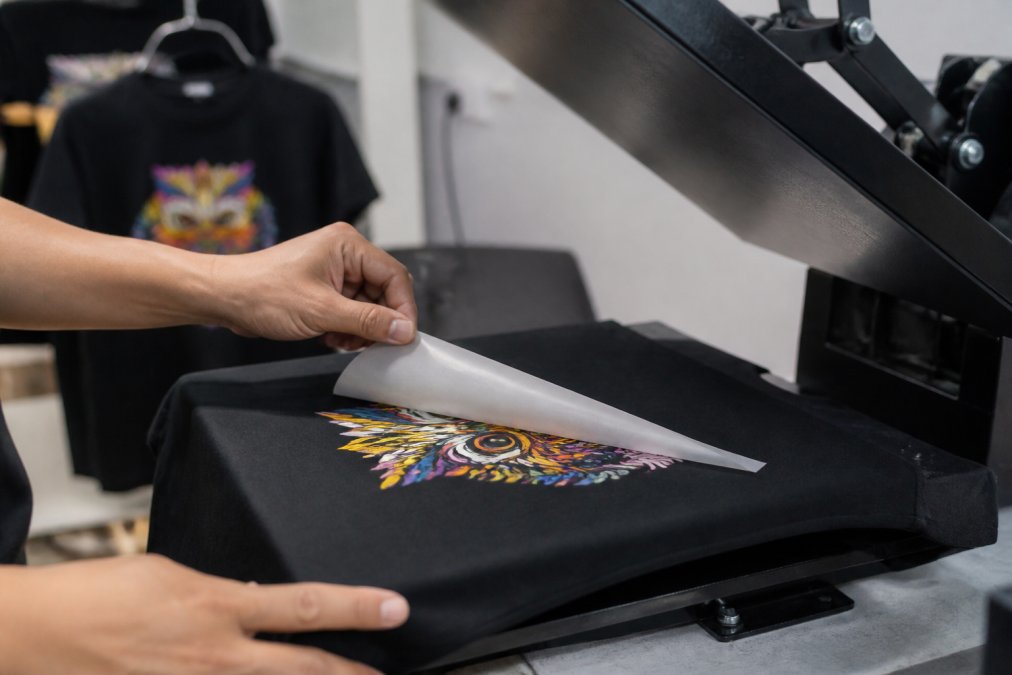
Setup costs for DTF are comparable to sublimation. You'll need a compatible printer, DTF-specific inks, transfer film, and a heat press. White ink management is critical, and improper powder application causes adhesion failures. However, once optimized, DTF typically offers faster turnaround than sublimation because there's no curing oven step.
The trade-off is hand-feel. DTF prints sit on top of the fabric and can feel slightly stiff compared to sublimation, which creates a dye bond that feels like the fabric itself. For high-end apparel or athletic wear where hand-feel matters, sublimation still wins. For bold graphics, streetwear, and dark apparel, DTF is superior.
How to Switch Sublimation Ink Brands Without Damaging Your Printer
Switching between sublimation ink brands requires discipline. Incompatible inks can clog printheads, cause color shifts, or leave residue that degrades print quality for weeks.
The safest approach is a complete system purge. Stop printing, run your printer's cleaning cycle three times, then run a nozzle check to confirm all colors fire evenly. This takes 30-45 minutes but prevents cross-contamination.
Next, verify compatibility. Not all sublimation inks work in all printers. Epson EcoTank systems and Sawgrass-converted printers accept most quality sublimation inks, but older Canon or Epson models may have proprietary chip requirements. Check your printer manual or contact the ink manufacturer directly. Printer Ink Pro offers dye sublimation inks starting at $19.95 per 100ml bottle, matched to specific printer models including WF-2960, EC-4020, and WF-4820, so you know compatibility before ordering.
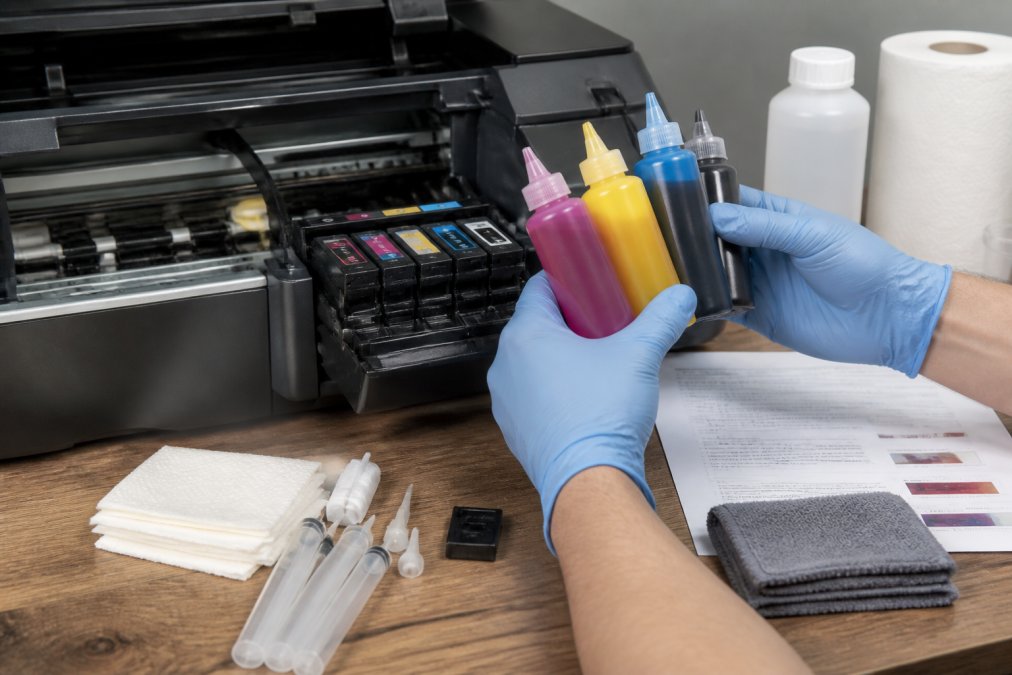
Introduce the new ink gradually. Fill one color cartridge, run 10-15 test prints on scrap polyester, and inspect for banding, color shifts, or streaking. If results look clean, proceed to the remaining colors. Document your switch with the old ink brand, date of change, new ink brand, and any print settings adjustments. This creates a reference point if issues arise later.
Quality matters. A brand that works flawlessly in one shop may cause clogging in another due to differences in printer maintenance, ambient humidity, or usage frequency. Cheap inks save money upfront but often cost more in lost production and printheads.
Sublimation Ink vs Pigment Ink: Key Differences and Use Cases
Dye-sublimation inks vaporize and bond with polyester fibers at high heat (around 400°F). The dye becomes part of the fabric at the molecular level, creating a permanent color that won't crack, peel, or fade. This process only works on polyester or polyester-coated substrates.
Pigment inks are water-based suspensions of colored particles that sit on top of the substrate. They work on virtually any material: cotton, canvas, leather, wood, metal, ceramics, and more. Pigment inks are the standard for fine art printing, photography, and direct-to-garment printing.
The trade-off is vibrancy and wash-fastness. Sublimation produces more saturated, brilliant colors because the dye integrates with the fiber. Pigment inks can fade over time, especially on light-colored fabrics exposed to UV light, unless you use UV-protective topcoats.
For custom apparel and promotional products, sublimation dominates because of its superior durability and color vibrancy on polyester. For fine art, photography, and wide-format printing, pigment inks are the standard. If your business prints on mixed substrates, you need both technologies or a hybrid solution like DTF.
Printer Ink Pro supplies both dye sublimation and pigment inks for professional workflows. The choice depends on your substrate mix and durability requirements.

Refillable Sublimation Ink Cartridges and Cost Savings
Refillable cartridges and bulk ink systems represent the largest cost reduction opportunity for high-volume print shops. Instead of buying new cartridges each time, you refill existing ones with bulk ink, reducing per-print cost substantially.
A typical OEM sublimation cartridge costs $40-80 and holds 25-40ml of ink. A refillable cartridge costs $15-25 upfront and holds 100ml, meaning you're paying roughly one-third the per-milliliter cost. For a print shop running 500+ polyester prints per month, switching to refillables can reduce annual ink spend from several thousand dollars to under a thousand.
Refillable systems require replacement chips that reset the cartridge counter, careful handling to avoid spills and air bubbles, and regular cleaning to prevent clogging. Printer Ink Pro's refillable cartridges are engineered for Epson and Canon professional models. The 100ml bottles of dye sublimation ink at $19.95 per bottle provide the raw supply you need. When paired with compatible refillable cartridge systems, you're looking at a cost per milliliter that's significantly lower than OEM pricing.
The payback period is typically 2-3 months for shops printing 300+ items monthly (sba.gov). However, if you print fewer than 100 items per month, the maintenance hassle may outweigh the savings.
| Setup Type | Upfront Cost | Cost per ml | Best For | Maintenance |
|---|---|---|---|---|
| OEM Cartridges | $0 | $1.50-2.00 | Low-volume shops | Minimal |
| Refillable System | $80-150 | $0.30-0.50 | High-volume operations | Weekly cleaning |
| EcoTank/MegaTank | $200-400 | $0.20-0.35 | Very high volume | Monthly servicing |
Heat Transfer Paper, Vinyl, and Polyamide Powder Alternatives
Beyond ink chemistry, the substrate or transfer method fundamentally changes your output options. Heat transfer paper, printable vinyl, and polyamide powder represent three distinct alternatives that avoid sublimation inks entirely.
Heat transfer paper is a coated substrate that you print on with standard inkjet inks, then iron or heat-press onto fabric. The advantage is simplicity: you can use any inkjet printer and any inkjet ink. The disadvantage is durability and hand-feel. Heat transfer prints are prone to cracking after 20-30 washes and feel noticeably stiff compared to sublimation or DTF (peer-reviewed research). It works best for one-off custom gifts and low-cost apparel where durability isn't critical.
Printable vinyl (also called heat transfer vinyl or HTV) is a thin plastic sheet with an adhesive backing. You print a design onto the vinyl using a color laser printer or inkjet, cut the design to shape, and heat-press it onto a garment. The vinyl creates a flexible, durable print that resists cracking and works on any fabric color. The limitation is print resolution, vinyl can't reproduce fine detail or photographic images the way sublimation or DTF can.
Polyamide powder is a thermoplastic adhesive that bonds ink to fabric when heated. In a DTF workflow, you apply polyamide powder to the wet ink on the transfer film, cure it with heat, and then heat-press the design onto the garment. The powder creates a flexible, wash-fast bond that rivals sublimation in durability.
Each alternative trades off some capability for simplicity or cost. Heat transfer paper is cheapest and easiest but least durable. Printable vinyl offers better durability and works on dark fabrics but sacrifices print resolution. DTF with polyamide powder delivers professional durability and color vibrancy but requires more equipment and skill.
Eco-Solvent Ink and Sustainability Considerations
Eco-solvent inks represent a shift toward more sustainable printing. Instead of water-based pigment inks or solvent-based inks that emit volatile organic compounds, eco-solvent inks use a gentler solvent that evaporates more slowly and produces fewer harmful emissions.
Eco-solvent inks are commonly used in wide-format printing for signage, banners, and outdoor displays. They adhere well to vinyl, fabric, and other materials and produce vibrant, durable prints that resist fading and weather exposure. On polyester apparel, eco-solvent inks can deliver results comparable to sublimation with lower environmental impact.
The trade-off is cost and equipment. Eco-solvent printers are more expensive than sublimation printers, and eco-solvent inks cost more than standard pigment inks. The slower evaporation time means longer drying or curing periods, which reduces throughput for high-volume shops.
For businesses focused on sustainability, eco-solvent inks are worth exploring, especially for outdoor signage and promotional products where durability and environmental responsibility both matter. However, they don't solve the fundamental limitation of sublimation: they still require specific substrate compatibility and heat processing.
Comparison Table: Sublimation Alternatives at a Glance
| Technology | Best Substrates | Print Quality | Durability | Setup Cost | Skill Level | Dark Fabric Support |
|---|---|---|---|---|---|---|
| Dye Sublimation | Polyester, coated hard goods | Excellent | Excellent | Moderate | Intermediate | No |
| Direct-to-Film (DTF) | All fabrics | Excellent | Excellent | Moderate | Advanced | Yes |
| Heat Transfer Paper | Cotton, polyester blends | Good | Fair | Low | Beginner | Yes |
| Printable Vinyl (HTV) | All fabrics | Good | Good | Low | Intermediate | Yes |
| Pigment Ink (Fine Art) | Canvas, photo paper, specialty | Excellent | Good | Moderate | Intermediate | N/A |
| Eco-Solvent | Vinyl, fabric, outdoor materials | Very Good | Excellent | High | Advanced | Yes |
Choosing the right sublimation ink alternatives depends on your specific business constraints: substrate mix, volume, durability requirements, and budget. Dye sublimation remains unmatched for polyester apparel and hard goods because of its color vibrancy and durability. But if your product mix has shifted, if you're losing orders on dark fabrics, or if ink costs are eroding margins, one of these alternatives likely fits your workflow better.
DTF offers the broadest substrate compatibility and solves the dark fabric problem that sublimation cannot address. Refillable sublimation cartridges cut costs dramatically for high-volume operations. Heat transfer paper and vinyl provide quick entry points for small businesses. Eco-solvent inks appeal to sustainability-focused operations.
At Printer Ink Pro, we supply the inks and components you need for multiple technologies. Our dye sublimation inks deliver vibrant, fade-resistant prints on polyester and coated substrates, available in 100ml bottles starting at $19.95 for specific Epson and Canon models. Whether you're optimizing your current sublimation setup or transitioning to DTF or another technology, we have the supplies and expertise to support your transition. Get started with Printer Ink Pro and find the ink solution that matches your actual business needs.
Frequently Asked Questions
Can you use different brands of sublimation ink in the same printer?
Yes, you can switch sublimation ink brands, but proper flushing is essential. Before changing brands, run cleaning cycles through your printer to remove residual ink from the previous brand. Different formulations have varying viscosity and dye chemistry, so mixing them in the same cartridge or lines can cause color shifts, clogging, or poor transfer quality. Most professionals recommend a complete system flush when switching brands to avoid ghosting and ensure consistent color vibrancy on substrates like polyester and ceramic.
What is the cheapest way to sublimate without using traditional sublimation ink?
Refillable sublimation ink cartridges offer a lower per-milliliter cost compared to OEM cartridges. Printer Ink Pro's 100ml dye sublimation ink bottles at $19.95 can provide savings for high-volume operations. DTF printing can also be cost-effective if you're printing on dark fabrics, since it eliminates the need for light-colored base layers. Heat transfer vinyl and printable vinyl are budget-friendly for smaller runs, though they lack the wash fastness and color vibrancy of sublimation on polyester.
How does sublimation ink vs pigment ink affect my final print quality?
Sublimation ink bonds chemically with polyester fibers and coated substrates through heat, producing fade-resistant, vibrant results with smooth gradients. Pigment ink sits on the surface of materials, making it better for fine art prints on paper but less durable on fabrics. Sublimation delivers superior color vibrancy and wash fastness on apparel, while pigment ink excels in detail and archival quality for fine art and photography. For custom merchandise and garment personalization, sublimation ink provides better transfer efficiency and durability.
What should I know before switching to refillable sublimation ink cartridges?
Refillable cartridges require careful handling to avoid air bubbles, which cause banding and color shifts. Ensure your printer model is compatible, Epson and Canon printers with converted or EcoTank systems work best. Start with a test print on scrap polyester to verify color accuracy before running customer orders. Refillable systems demand regular maintenance: run cleaning cycles monthly, keep ink bottles sealed when not in use, and monitor ink levels to prevent printhead clogs. Printer Ink Pro offers 100ml bottles specifically formulated for various Epson and Canon printer models.
Is it safe to switch sublimation ink brands without voiding my printer warranty?
Using third-party or refillable sublimation inks may void warranties on some OEM printers, particularly Canon and Epson models with proprietary cartridge chips. However, converted or dedicated sublimation printers (like EcoTank systems modified for sublimation) typically support third-party inks without warranty issues. Check your printer's documentation or contact the manufacturer before switching. Many print shops successfully use quality refillable inks without damage, but using low-quality alternatives increases risk of printhead clogs and color banding.
This article was written using GrandRanker